What Does WFH Mean? Work-From-Home Explained.

Short Summary
-
WFH is an abbreviation for "Work From Home" and can be written as "Working From Home" or "Work-From-Home"
-
WFH means you do your job from your home office instead of your company's office
-
WFH can be fully remote, hybrid, full-time or part-time and is usually limited to certain locations, so knowing your company's policies is important
-
Looking for a WFH job? Check out our WFH Job Board here.
Introduction
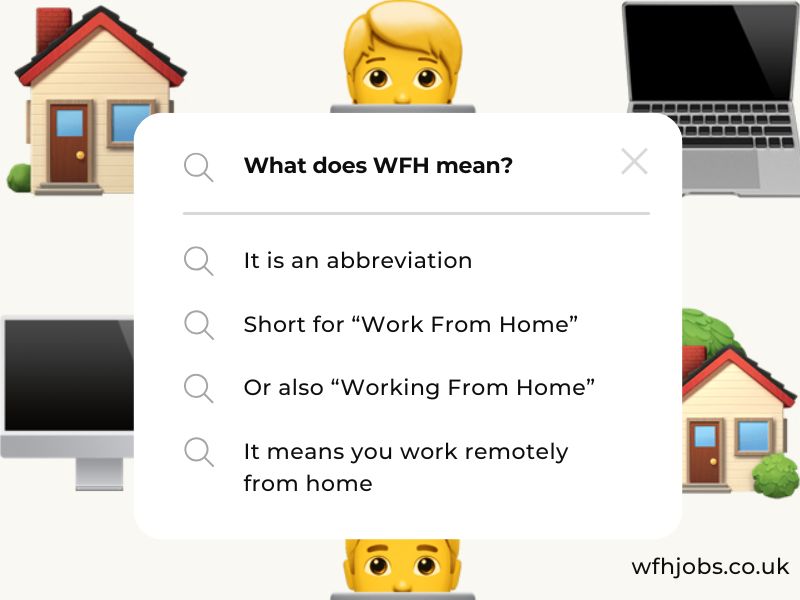
If you look at different job postings, you will see the WFH abbreviation occasionally. Or, looking on Slack, you can see your colleague has a house 🏡 emoji and has written "WFH" as their status. Yet, what does it really mean?
In this article, I will explain what WFH is and how it differs from remote work, and walk you through the reality of WFH, so you can be confident in knowing what WFH truly means.
What Does WFH Actually Mean?
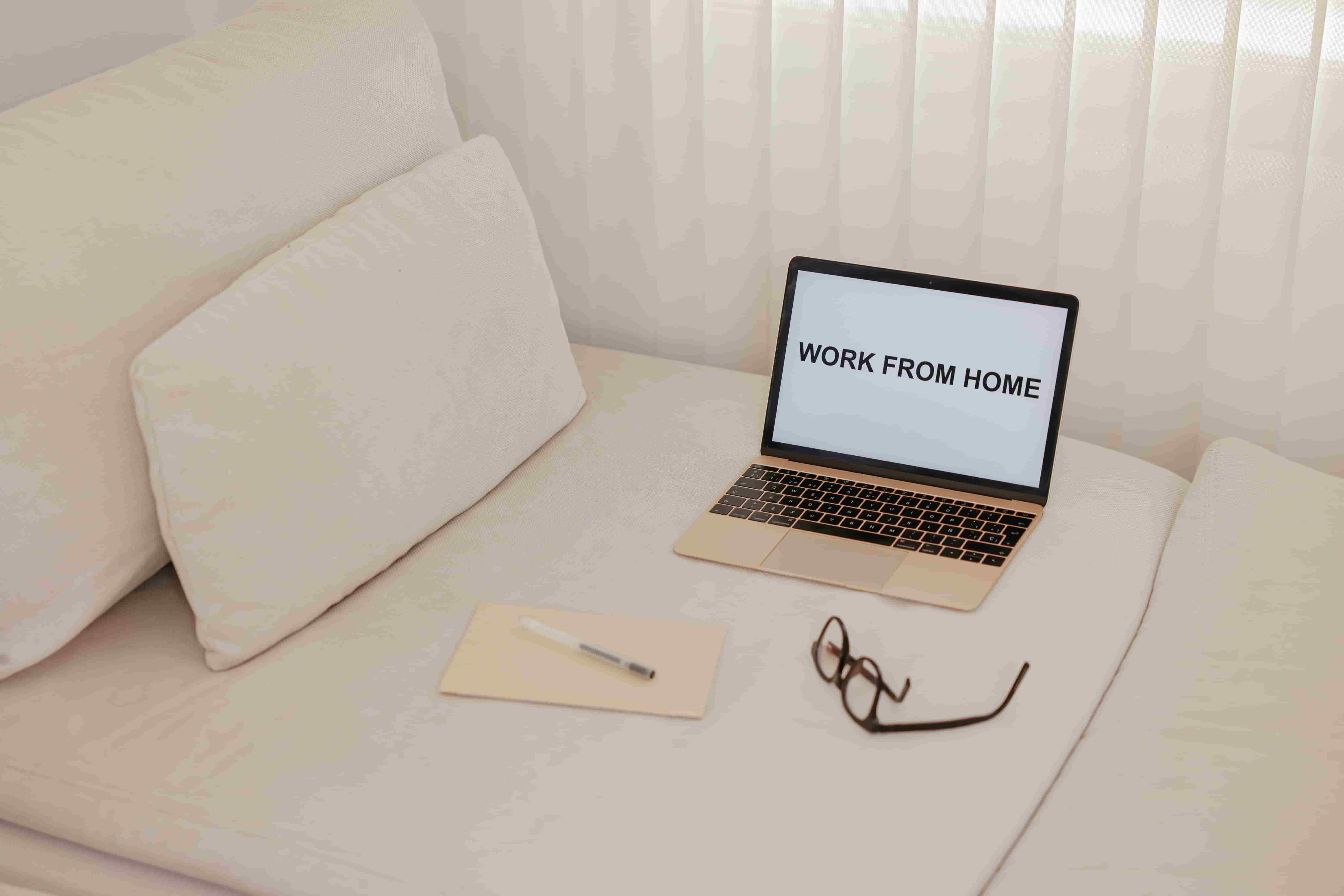
WFH is an abbreviation for "Working From Home" or also "Working From Home". It sometimes is written differently, such as "Work-From-Home", which is another acceptable way to write it out.
Common ways to use WFH are in job postings, company policy or status updates, where they could say something like "This is a part-time WFH software engineering role." or "WFH today."
Since the 1980s, working from home has become more and more mainstream, while the shift toward WFH in the UK has accelerated rapidly since COVID, changing what employees expect and how companies can attract top talent. In 2025, the ONS reported that 28% of UK employees worked in a hybrid setup, which is four times higher than in 2019. That means at least 28% of UK employees work from home at least once a week.
There are many different roles one can do working from home. Here is a list of the most common WFH jobs in the UK.
There are numerous benefits of WFH. Personally for me, the biggest benefits of working from home is that I save a lot of time, energy and money travelling to the office and can complete my job more focused, while having a better work-life balance. Read more here if you want to learn more about the benefits and negatives of working from home.
WFH vs. Remote Work: What is the Difference?

There are some key differences between WFH and remote work you need to be aware of. 'Remote work' refers to working from various locations (primarily in specific countries), while 'work from home' means working from your own home address. We personally like the term WFH because it accurately describes the most common type of remote work: working from home.
Below is a table that explains the key differences easily.
Term | What It Means | Watch For |
|---|---|---|
| WFH | Employer permits home-based work. | Doesn't confirm schedule, location, or how long it lasts. |
| Fully Remote | No routine office attendance. | Location restrictions may still apply. |
| Remote-First | Remote is the default model. | Offices exist; visits still possible. |
| Remote Within the UK | You can work remotely. | Only from an eligible UK region. |
| Work From Anywhere | Broad location freedom. | Check payroll, visa, and time limits. |
| Hybrid Remote | Some home working allowed. | Regular office attendance required. |
| Temporary WFH | Home working allowed now. | Time-limited; may shift later. |
Work From Home Policies

From personal experience, I highly recommend that you read and understand your company's work-from-home policies so that you and the company complies with local laws and regulations. In opposition to working remotely from anywhere in the world, WFH is often seen as the more realistic option from a regulations and employment law point of view.
Very often, companies use WFH jobs to give their employees benefits while still knowing where you work (i.e., in your home). The reasons are obvious: if you are in a cafe talking and sharing your screen about sensitive company data, your company can quickly run into difficulties.
Or in my case, I was not able to work from any country and had to be approved beforehand with the specified timeframe, as my statutory accident or employer liability insurance company policies otherwise would not be covered. At the same time, working from home was never an issue for me, as WFH requires me to be within a particular region or near the office for occasional in-person tasks.
Best practices for WFH

How can you work best from home?
In my personal experience, you need at least three criteria met:
-
You need reliable internet. Test your internet speed here.
-
You need reliable and working hardware, such as a great computer, screen, microphone and camera. Test your microphone here.
-
You need a silent room to be able to work with great focus. I personally like a simple, silent office with as little furniture as possible and a lot of natural light, which helps me work undisturbed.
To conclude, WFH means Working From Home and means you, as an employee, work from your home in a safe, silent space with a stable internet connection.