Signs You Will Get the Job After an Interview

Short Summary
-
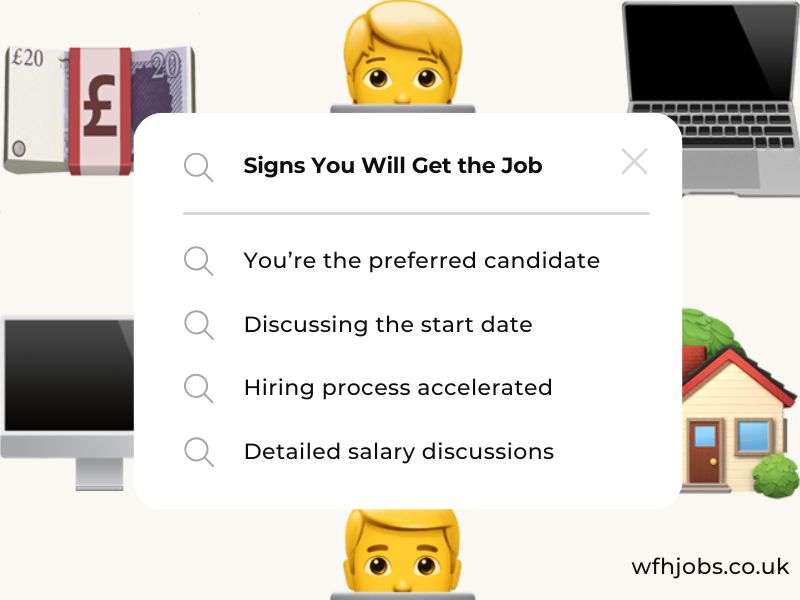
The strongest signs you will get the job involve concrete employer actions that move your candidacy closer to employment or require additional time, money, approvals or administrative effort.
-
Being named the preferred candidate, completing pre-employment checks and discussing a specific start date are among the strongest indications that you have reached the later stages of hiring.
-
An unexpected meeting with a senior decision-maker or an accelerated hiring timeline can suggest the employer is willing to commit additional resources to keep your candidacy moving.
-
More detailed salary discussions, a personalised pitch about the role or an unplanned office tour can be encouraging signs that the employer is seriously considering you.
-
Strong rapport, positive body language, compliments and a post-interview LinkedIn connection may indicate that the interview went well, but they reveal much less about your position relative to other candidates.
-
Judge each sign by what actually changed in the hiring process, and never resign from your current job or make major plans until you have accepted a formal offer.
Introduction
You have just walked out of a job interview knowing you gave it your best shot. If only you could grab a crystal ball, peek a few days ahead and find out whether an offer has your name on it. Unfortunately, recruitment does not come with spoilers.
What you do have are clues sitting right under your nose. Certain interviewer behaviours and post-interview actions can indicate that your candidacy is progressing, although having gone through plenty of interviews myself, I have learned, sometimes the hard way, that not every seemingly positive sign carries equal weight.
As such, I put together this guide to walk you through the common signs you will get the job after an interview, which indicators may make you optimistic, and which ones are better taken with a grain of salt.
By the end, you should have a clearer idea of where you stand after interviewing for your next remote, hybrid or work-from-home role.
Strong Signs You Will Get the Job After an Interview

The strongest signs you are getting the job after an interview involve actions that move your application closer to employment or require the company to commit additional time, approvals, money or administrative effort specifically to you. Think of these as ‘high-cost’ signs.
Of course, none of this amounts to a guarantee. But if several of the signs below start stacking up, there is a good chance your candidacy has moved beyond a routine interview and into the later stages of the hiring process.
1. They tell you that you are their preferred candidate
Few sentences sound sweeter after a job interview than, ‘You are our preferred candidate.’ Employers generally do not put their cards on the table that openly unless they have already compared you against other shortlisted candidates.
And remember, getting to that point may already represent hours spent reviewing applications, interviewing candidates and discussing who should move forward.
An even stronger variation is when they tell you why you stood out. Maybe your industry background fills a knowledge gap, or they mention a project from your CV that aligns almost perfectly with an upcoming initiative.
Comments like these suggest the conversation has moved beyond simply evaluating whether you are qualified. They are beginning to picture where you fit and what you could contribute once you join.
Even so, ‘preferred candidate’ still does not mean ‘hired’.
Many organisations issue a conditional offer before confirming employment, meaning your offer may still depend on successfully completing requirements such as reference checks, background checks or right-to-work verification. Speaking of which...
2. They ask you to complete pre-employment checks

Another strong sign is when the conversation starts shifting away from assessing your suitability and towards getting the paperwork in order for employment. That often happens when HR asks you to begin pre-employment checks, such as:
-
Providing permission to contact your referees.
-
Submitting documents to verify your right to work.
-
Completing a Disclosure and Barring Service (DBS) check or other background check where required.
-
Providing copies of qualifications, licences or professional registrations.
-
Completing pre-employment forms or screening through a candidate portal.
None of these requests is unusual on its own. But the fact that they happen after your interview tells you that your candidacy is progressing.
The hiring process is time-consuming, involving tasks such as chasing busy referees for responses and coordinating with third-party screening providers. There is little reason to spend that time and money on candidates who have already been ruled out.
Still, keep the champagne corked until your pre-employment checks have been cleared. A conditional offer can still be withdrawn if a check raises an issue or one of the conditions is not met (GOV.UK, 2026).
3. They start discussing a specific start date
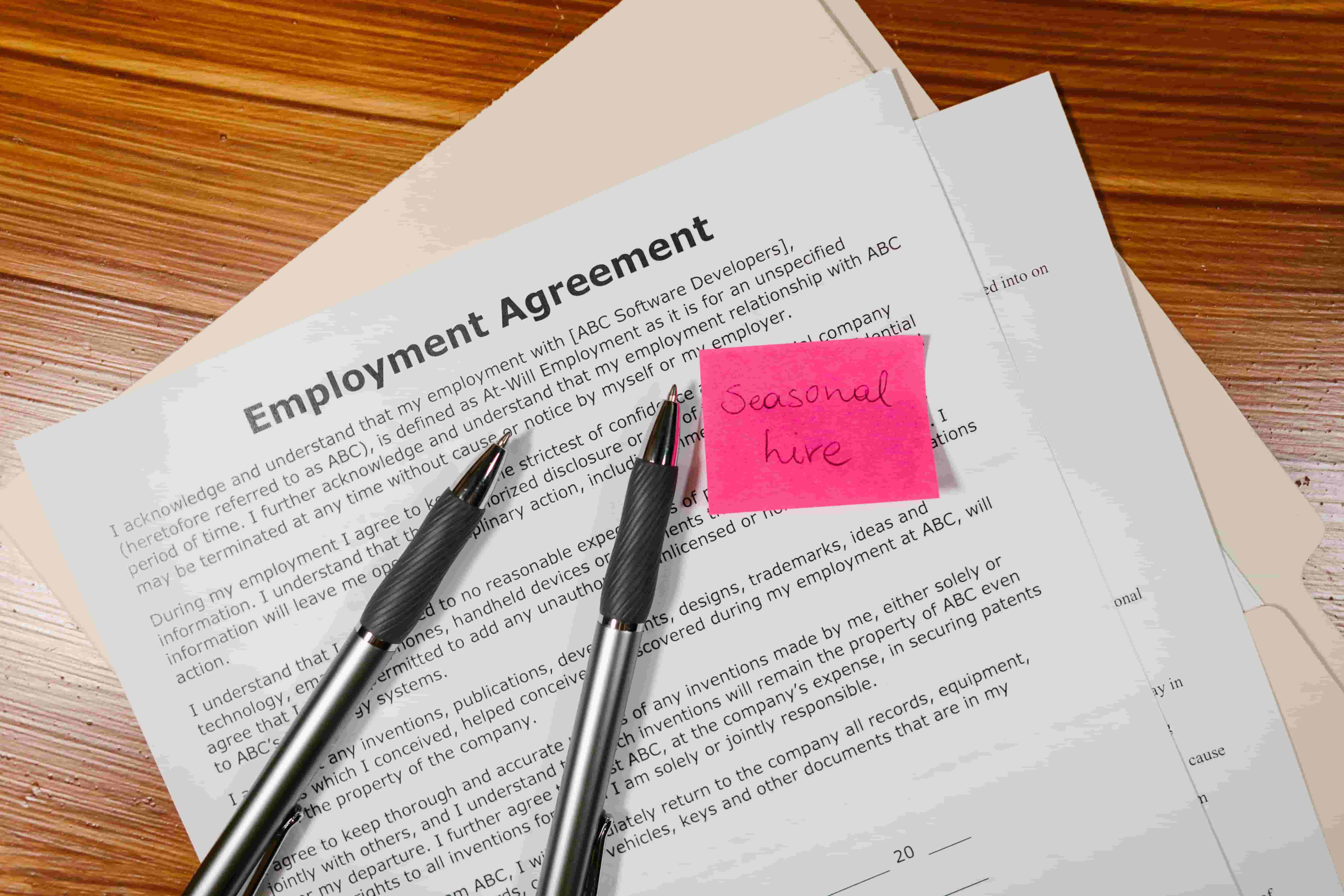
There is a world of difference between ‘When would you be available to start?’ and ‘Would Monday, 14 September work as your first day?’
The first is a simple, routine job interview question that appears on application forms or comes up during an initial HR screening. The second comes with a greater degree of specificity and intent; they are no longer asking whether you can join but when you can join.
You may also find that questions about your notice period begin to surface around this stage.
An employer asking how soon you could realistically leave your current job, particularly if nobody asked earlier in the process, may be working backwards from a potential start date and trying to get the timing to line up on both sides.
4. A senior leader or executive wants to meet you
If, shortly after your interview, you are unexpectedly invited to speak with a department head, director, vice president, founder or another senior decision-maker, take notice.
Their calendars are among the busiest in the organisation, so companies usually do not bring senior leaders into the conversation on a whim.
If anything, it means something about your candidacy has caught someone's eye higher up the chain. A founder might want to hear more about your experience launching a product, or a VP might have seen value in your unusual blend of technical expertise and client-facing experience.
Either way, getting your application in front of someone that high up the organisation is promising.
Again, there are no guarantees, but out of my own experience, you can (and do) get hired shortly after conversations like these, particularly when the person has final approval or considerable influence over the decision.
For example, when I talked with the partner of the IT Consultancy I was working at, after 20 minute of talking with him, he left the room, and returned 2 minutes later with a printed job offer and wished me a nice day. This is rather rare, but just shows that if you are on the radar of the decision maker and convince them, the entire hiring process can be accelerated. This comes to the next point...
5. They accelerate the hiring process for you
If a company routinely moves candidates to the next stage within 24 hours, a call the following day is simply business as usual.
But if you were told to expect an answer next week and your phone rings that afternoon asking whether you can meet the director tomorrow, complete with an apology for the short notice and an explanation for the sudden rush, that is a different story. The company may have departed from its usual process in your favour.
That acceleration can take several forms. You might be offered another interview much sooner than expected, asked to accommodate a last-minute meeting or even have certain stages of the recruitment process shortened or skipped altogether.
Moving at that pace often means rearranging calendars and committing additional resources to keep your candidacy moving. If you have mentioned interviewing with other companies or considering another offer, the employer may accelerate its decision to avoid losing you to a competitor.
Of course, speed alone does not tell you why the company is moving quickly. They may urgently need to fill the vacancy, or another candidate may have suddenly withdrawn and left you next on the shortlist.
Whatever is happening behind the curtain, though, if a company has gone out of its way to move you through the process faster than planned, you are still very much in the running and potentially within touching distance of an offer.
Encouraging Signs You Could Get the Job

The signs below can look very promising from your side of the interview table, and you will often hear successful candidates mention them when recounting how their interviews went.
Still, I would keep in mind that they could just as easily be part of an employer's standard procedure. Take them as encouragement rather than confirmation that an offer is on its way.
6. The interviewer starts selling you on the job
You have spent most of the interview persuading the employer that you want the job and are right for it. If the tables suddenly turn and they start putting more effort into persuading you that you might want to work for them, take note.
Pay particular attention when the pitch becomes personal. You mention that flexible working matters to you, and later they point out that the team works remotely three days a week. Or you talk about wanting greater career progression, and they start explaining the company's training budget or how people typically move up through the team.
The more personally tailored the pitch becomes, the more reasonable it is to think the interviewer sees you as a candidate worth winning over.
7. They give you an unplanned office tour
The interview wraps up, but instead of showing you straight to the door, the hiring manager says, ‘Come on, let me introduce you to the team.’
An impromptu tour, by virtue of being unplanned, shows they are willing to stretch the clock for you, perhaps to introduce you to potential colleagues, show you where the team works or explain how things operate day to day.
So why extend the interview when they could simply shake your hand and call it a day? Well, to give you a glimpse of what could be waiting on the other side of a job offer — call it a little courtship to win you over.
8. They have a detailed conversation about salary expectations
Chances are, you have already discussed or at least touched on salary expectations in the job description, application form or an earlier conversation with HR.
But when the subject comes up again after your interview, particularly in greater detail, it can suggest the employer is considering the practical terms under which you might actually join.
What was once a broad salary range starts narrowing towards a specific figure, while bonuses, benefits and competing offers begin slotting into place around it.
This may even turn into a salary negotiation tango as the employer gauges what it would take to get your signature on the dotted line.
9. The interview runs longer than expected
If your allotted 45 minutes comes and goes while the interviewer is still happily picking your brain, you have reason to feel encouraged. Hiring managers have calendars to keep, and when a conversation is worth letting the clock run for, there is usually something keeping them interested.
A better yardstick, though, is what actually filled those extra minutes.
If sharing a particular experience sparks a string of follow-up questions, the next one more specific and tied to a real project or challenge the company has been wrestling with, your interview has clearly found some meat on the bone. That is the kind of interview overrun worth smiling about.
10. You built strong rapport with the interviewer

If the conversation flowed easily, jokes went both ways and you found yourselves bonding over a shared hobby or, heck, even bonding over the fact that you swear by the same skincare brand, you have another reason to walk away encouraged.
While getting the job depends heavily on the match between what the role demands and what you can offer, the human side is intertwined throughout.
A study by Barrick et al. (2011) found that interviewers' initial impressions of candidates during the rapport-building stage were strongly related to how they subsequently evaluated candidates' answers to structured interview questions.
So, if the interviewer genuinely enjoyed talking with you, that rapport may leave you in a more favourable light when they later weigh up their candidates.
Other Signs That Your Interview Went Well

The signs below show that you made a strong impression. But on their own, they tell you more about how well the conversation went than whether you are ahead of the other candidates or an offer is imminent.
They could simply be a reflection of good interviewing etiquette or a recruiter's communication style, but they are positive signs nonetheless.
11. The interviewer showed positive body language
Frequent eye contact, smiling, nodding as you speak, an attentive posture and responsive facial expressions are all good things to see on the other side of the conversation. At the very least, they suggest the interviewer is engaged with you and receptive to what you are saying.
But how much does that really tell you about whether your name is at the top of the shortlist?
Consider the reverse. An interviewer could remain serious and relatively expressionless from start to finish, yet you could ultimately walk away with the job. I have been through enough interviews myself to know this is simply how some people interview.
The takeaway? These behaviours tell you far more about the quality of the interaction than the hiring decision itself. So, take the smiles and nods as a welcome indication that the conversation went well, but do not put too much stock in a friendly face or the lack of one.
12. The interviewer complimented or praised you
Much like positive body language, hearing 'That's impressive' certainly feels good. Better still if the praise is specific and tied directly to something the employer is looking for, such as your experience managing a similar project or a qualification listed in the selection criteria.
However, compliments are easy currency in an interview. For all you know, the same compliment has been given to three other candidates that afternoon, whether out of genuine admiration or simply to keep the conversation light and breezy.
13. The interviewer connects with you on LinkedIn
Seeing a LinkedIn connection request from your interviewer pop up after the interview is certainly a pleasant surprise. Maybe even try our LinkedIn Text Formatter for formatting your LinkedIn text.
On the bright side, they have chosen to keep a professional line open with you rather than letting your interaction end with the interview, which, on the face of it, can feel like a small nod in the right direction.
But there are two sides to that coin. It could be that they liked what they heard and want to keep you within reach as the hiring decision unfolds. Then again, they may simply be expanding their professional network or adding you to an informal talent pool.
Final Thoughts

To judge your chances after an interview with a clearer head, distinguish between what simply felt positive and what actually changed your position in the hiring process.
Ask yourself: did the employer take concrete steps that brought you any closer to becoming an employee? The more effort they put behind your candidacy, the more weight that sign deserves.
Even then, I strongly advise against handing in your notice or making major plans until you have accepted a formal offer. Hiring decisions can change even at the last minute, so do not count on anything or make drastic decisions, unless you have signed the employement contract and your move is official.
Still searching for a remote, hybrid or work-from-home role? Browse WFH Jobs for handpicked opportunities and find your next application!
References
Barrick, M. R., Dustin, S. L., Giluk, T. L., Stewart, G. L., Shaffer, J. A., & Swider, B. W. (2011). Candidate characteristics driving initial impressions during rapport building: Implications for employment interview validity. Journal of Occupational and Organizational Psychology. https://doi.org/10.1111/j.2044-8325.2011.02036.x
GOV.UK. (2026). Job offers: Your rights. https://www.gov.uk/job-offers-your-rights